Shandaken's Hamlets
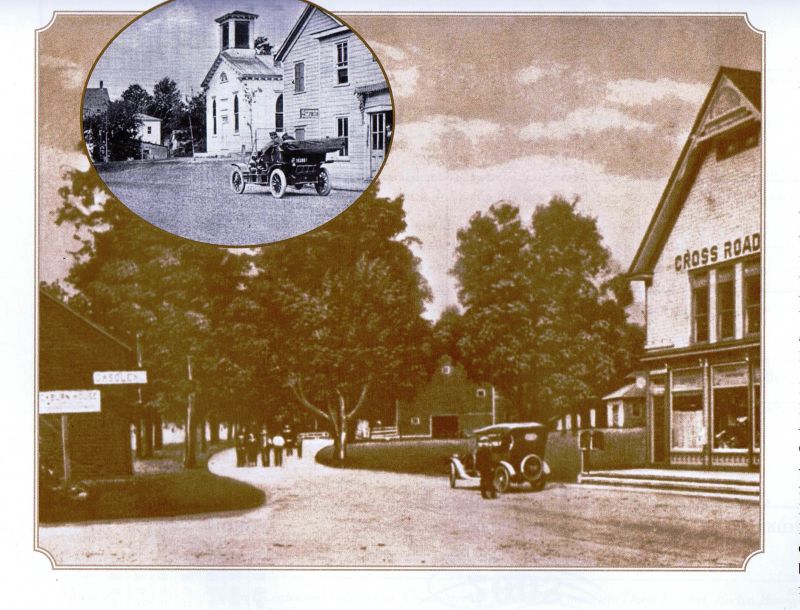
 Situated in the southeastern tip of the Town of Shandaken, Mount Tremper was in a valley through which settlers, turnpike sand roads would first pass on the way west. Fort Shandaken, built about the time of the Revolutionary War for the protection of Kingston against Indian raids, was located in Mount Tremper. First settled by the Winnes, Hudlers, Longyears and Satterlees, the village was known as Ladew Corners (The Corners) and was finally named Mt. Tremper in 1909. Pictured below are the first Post Office in Mt. Tremper, the Dutch Reformed Church and the Cross Roads Store.
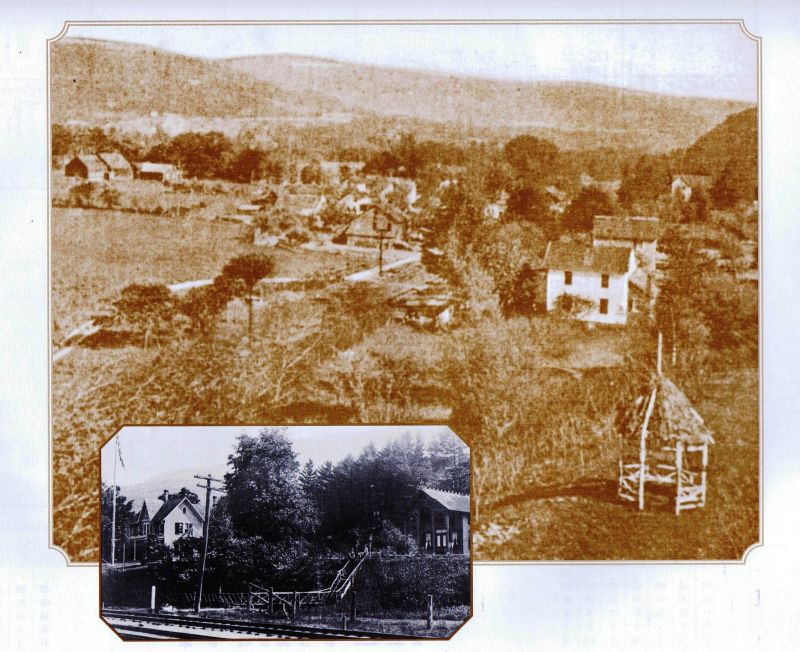
The sister hamlet of Mount Tremper, Mount Pleasant was originally called Longyear, named for one of its first settlers. Farming, lumbering and a large blue stone quarry were the main industries. With the arrival of the railroad in 1870, it took a major change with boarding houses and seasonal vacation homes built for the flocking tourists. Photo below shows Riseley Farm, originally the Longyear Farm. Inset shows “the Winne Cottage.”
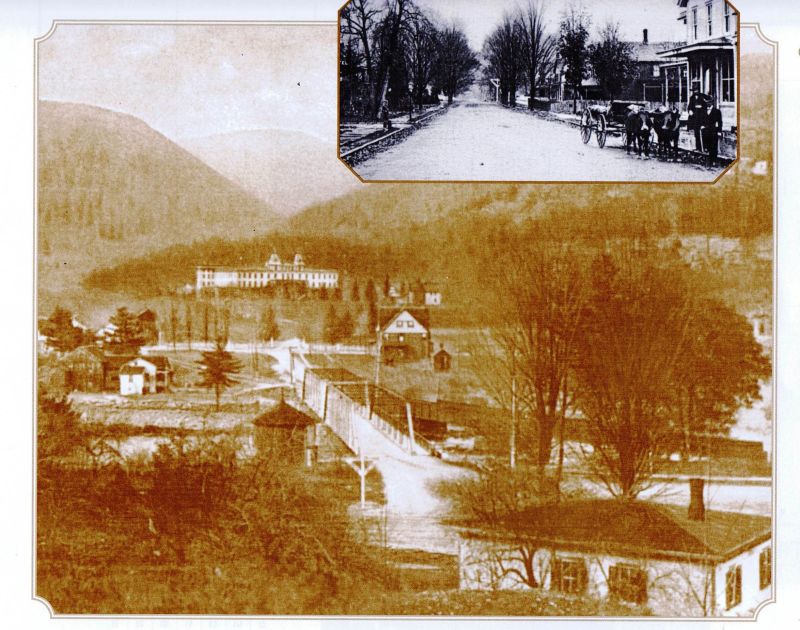
The largest hamlet in the Town of Shandaken, Phoenicia was once a busy hub of the Ulster and Delaware Railroad. Except for a few new buildings, it hasn’t changed that much since the original eleven lots were laid out on each side of the street in 1853. Pictured below view from Romer Mountan with the Tremper House in background, looking toward the Stony Clove Notch, where the rail line, after branching off from the main line at Phoenicia, carried many tourists. The inset shows the Main Street in the late 19th century.
“Once in a while, you discover a town that has everything-great coffee, food with character, shop owners with purpose.” That’s how Budget Travel described Phoenicia when they voted us one of the top ten, “Coolest Small Towns in America” in 2011.
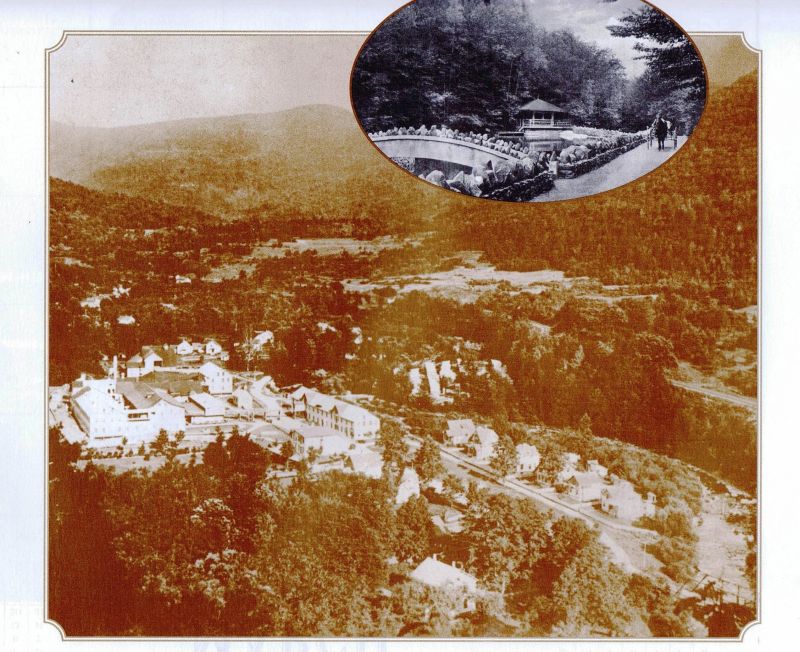
This quaint hamlet was founded in 1863 by the Chichester family as a factory town to house skilled workers for their chair making and cradle business. Both factory and village were later sold to the Schwarzwaelder family, makers of fine office furniture. Workers enjoyed recreational buildings, a general store, Post Office and church – all company built, owned and maintained – until the Great Depression brought about the complete auction of the factory and entire village in 1939. Most of the original homes and buildings still exist today, including the building that has housed the Post Office since 1909.
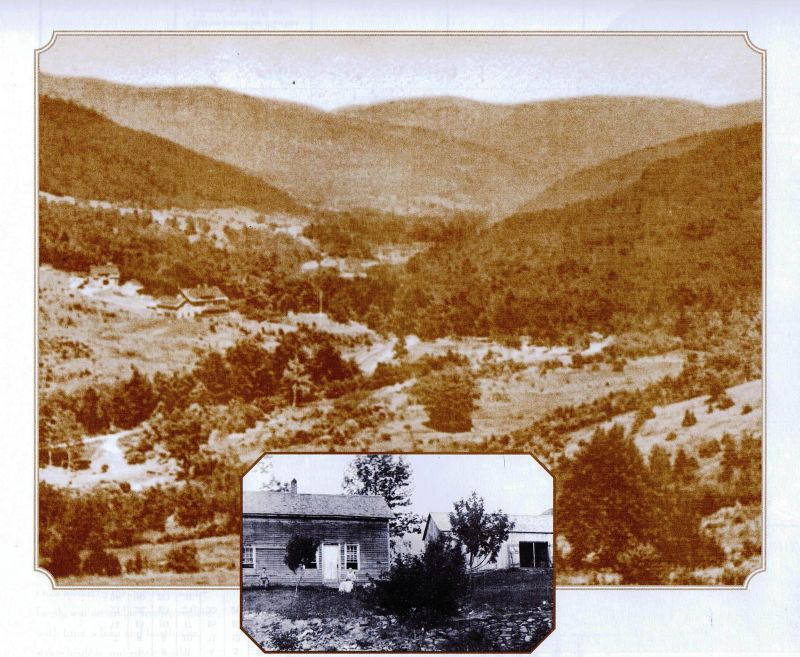
 It has been said that this valley is “one of the most picturesque and beautiful of the whole Catskill region” and “a place of quiet and rest.” Entered through a narrow pass between Mount Garfield and Mount Romer, it makes its way for about six miles to the base of Slide Mountain. Woodland Valley is home to the celebrated Roxmor Colony, founded in 1899 and still in existence today. The Larkin Farm was one of the earliest settlements in Woodland Valley. Along with the nearby home of artist Thomas Bigelow Craig, the farm was reputedly one of naturalist John Burroughs’ favorite places in the Catskills.
Originally called Fox Hollow, Allaben Named after Dr. Orson Allaben. One of the Town of Shandaken hamlets settled along the narrow main valley through the Catskill Mountains, it is now the site of the Town of Shandaken Government Offices and Highway Department. The 18-mile-long Shandaken Tunnel, carrying water from the Schoharie Reservoir bound for New York City, empties here into the Esopus Creek. Photo below shows Town Hall before burning in 1940’s, Allaben Post Office, Haynes Grocery Store & Ennist Garage.
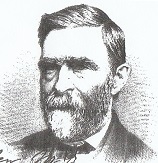 Allaben was named by George BM Riseley about 1890 in honor of Dr. Orson M. Allaben of Margaretville, who had many patients & friends in this community. While he never actually lived thre, Dr. Allaben once owned the property of which the Getty gas station at the foot of Broadstreet Hollow is a part. Before being named Allaben, it was Fox Hollow, named for Thomas Fox , an early resident. The railroad station at Allaben was first called Fox Hollow, then Allaben.
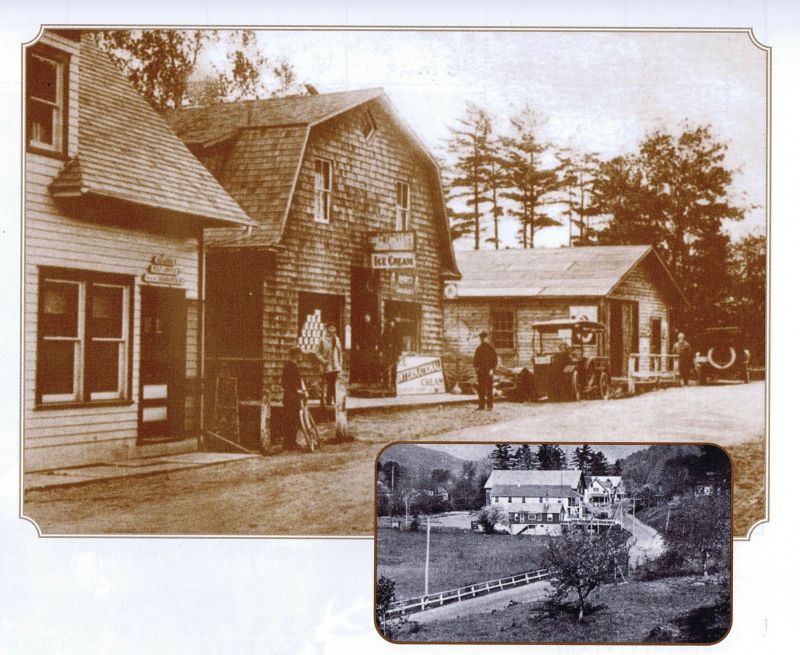
The Shandaken hamlet is located in the central portion of the Township. The word “Shandaken”, a Native American derivative meaning “rapid waters”, refers to the Esopus Creek, which flows through the Town and supplies water to the Ashokan Reservoir, one of New York City’s major water sources. Shandaken Centre once housed a chair factory and several substantial hotels and was a thriving business center with wagon and blacksmith shops, grist mill, sawmill, grocery and general stores, Post Office (the first in Shandaken Township), railroad station and church. Inset picture shows Shandaken Post Office & Grocery Store, circa 1920.
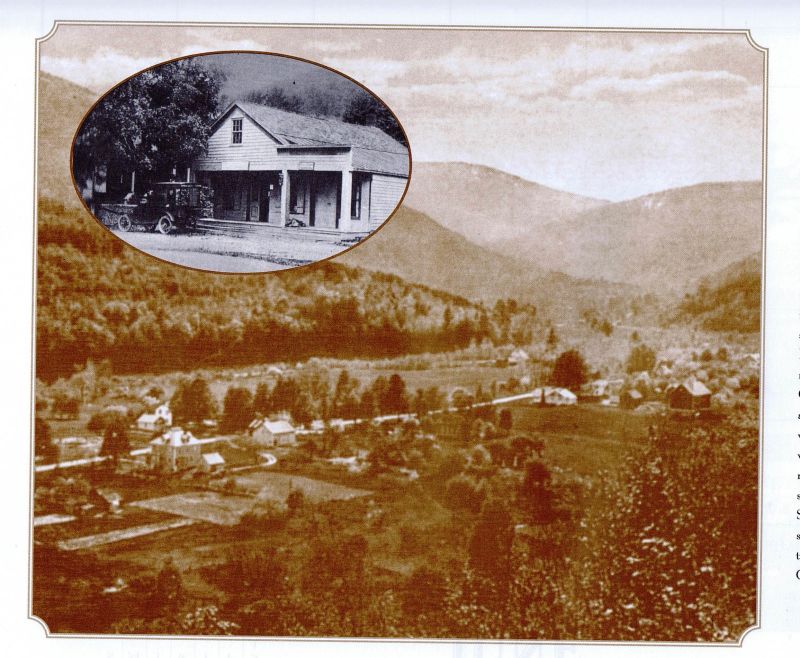
Bushnellsville on Route 42 was named for the Bushnell family, who settled the valley in the mid-1800’s. By the early 1900’s, there were many farms in the area; most families kept at least one cow and many shipped apples and sold maple syrup. At that time, the hamlet had its own Post Office, several general stores, a cider mill, ice houses and even a bowling alley. Supplies were delivered from Phoenicia once a week by horse and wagon.
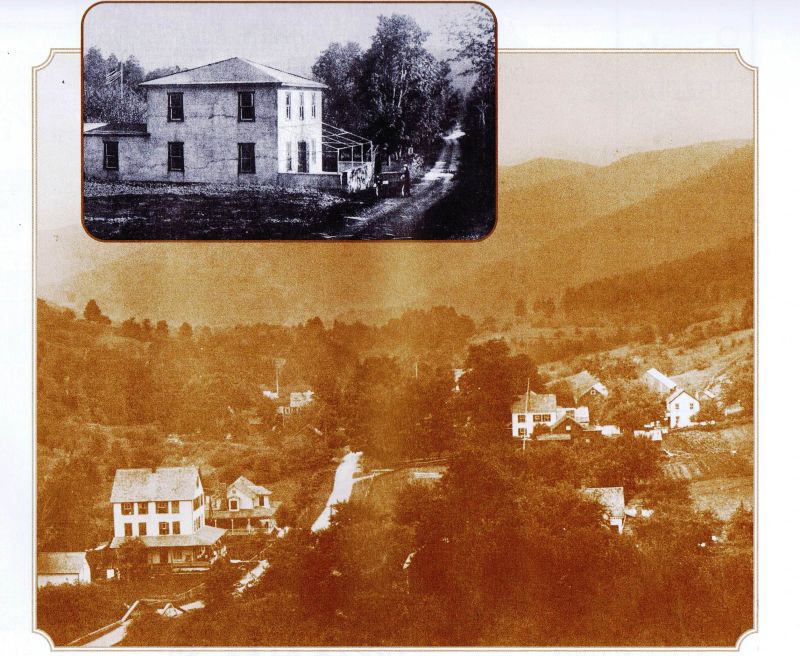
To enter Big Indian Valley from Route 28, turn onto County Route 47, Oliverea Road. A journey through this scenic area affords many beautiful mountain views, as you pass Belleayre, Balsam, Eagle, Big Indian, Fir, Spruce, Hemlock and Panther Mountains, finally reaching Slide Mountain, the highest peak in the Catskills at 4,204 feet above sea level. Big Indian offers a choice of hunting, fishing and hiking and boasts of numerous boarding houses, motels, cabins and restaurant. Above all, the Valley gives the gift of “solitude”.
The Big Indian name derives from an Indian who lived there many years ago.. according to legend:
According to the story, when the Dutch settlers came to the Catskills, there was a young woamn, Gertrude, a daughter of one of the settlers, a man named Molyneaux. Gertrude fell in love with an Indian. This indian was called Win-ni-sock. He was said to be over seven feet tall, which is why he was nicknamed “Big Indian.” Although she loved him, Gertrude married a young white man, Joe Bundy, following her parent’s wishes. Bundy was bad-tempered and had very bad habits. Gertrude lived unhappily with him for some time. Win-ni-sock saw how unhappy Gertrude was and visited her secretly. They planned to elope and disappeared together. Gertrude and Win-ni-sock lived happily together for several years.
The Dutch settlers, who had located themselves in the fertile valleys and plains, suffered from raids where the Indians would steal their sheep and cattle and then run the animals off cliffs. One day the Indians were returning from one such raid and Joe Bundy led a search party after them. He shot Win-ni-sock near the heart. The Big Indian took refuge in a hollow pine nearby, where he died standing up straight inside the tree. Gertrude found him there and had him buried near the tree. She and their children lived out the rest of her days next to this tree. Sometime later the railroad was built through the mountains and the tree trunk was buried right underneath it. No one knows for sure where the tree was originally, but it is somewhere near the middle of town.
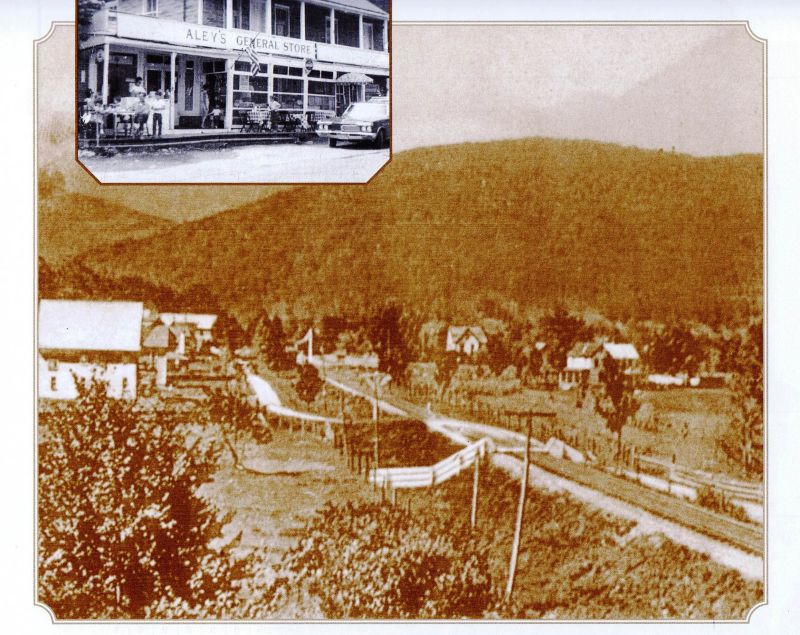
Founded in 1886, Oliverea’s famous Winnisook Club sits at the base of Slide Mountain, 3,000 feet above sea level. In 1887 a lodge was built on the private club’s 1,600 acres, and eventually 14 private homes were added, with ownership passing down through the original owners’ families. A natural lake, which empties into the headwaters of the Esopus Creek, was dammed to form a five-acre lake for recreation. Many celebrities have visited the club, including William Jennings Bryan, John Burroughs and John Kennedy Jr. Winnisook is the oldest active club in the Town of Shandaken.
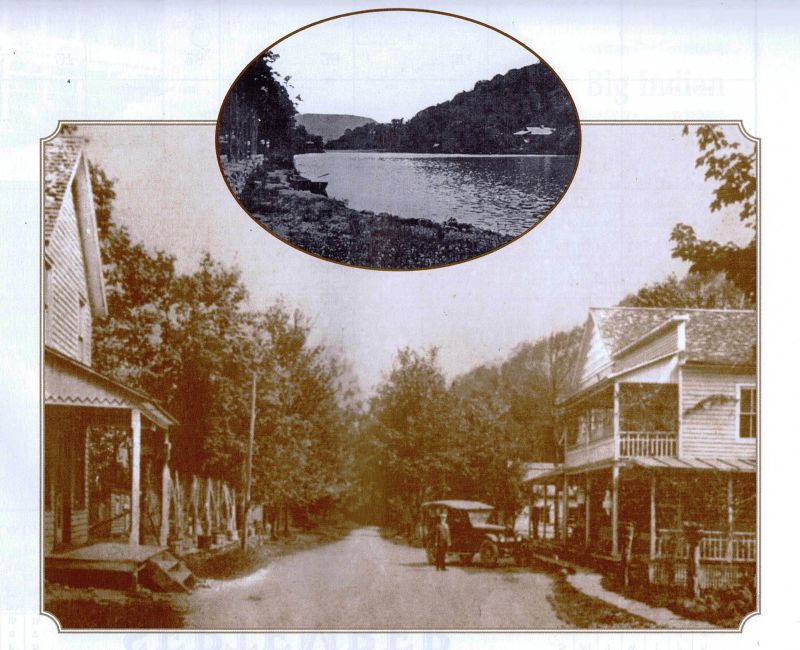

Pine Hill takes its name from the steep ascent rising towards Belleayre that famously challenged travelers and settlers heading west. Although settled during the late 1700’s, Pine Hill came into its own when the railroad reached it in 1872. In 1895, Pine Hill became an incorporated village, (but the village voted to dissolve its incorporation in 1985, becoming an unincorporated entity (hamlet).
Soon thereafter, the hamlet became a thriving resort. Summer visitors poured in to enjoy its spectacular scenery, clean air and pure water. Accommodations lined every street, the larger hotels bearing grand-sounding or romantic names, such as the Wellington and the Avon Inn. Home to two bowling alleys, two newspapers, several churches and stores, a silent movie theater, a stately stone library, and the Crystal Spring Water Company, Pine Hill was justly called the “Saratoga of the Catskills”.
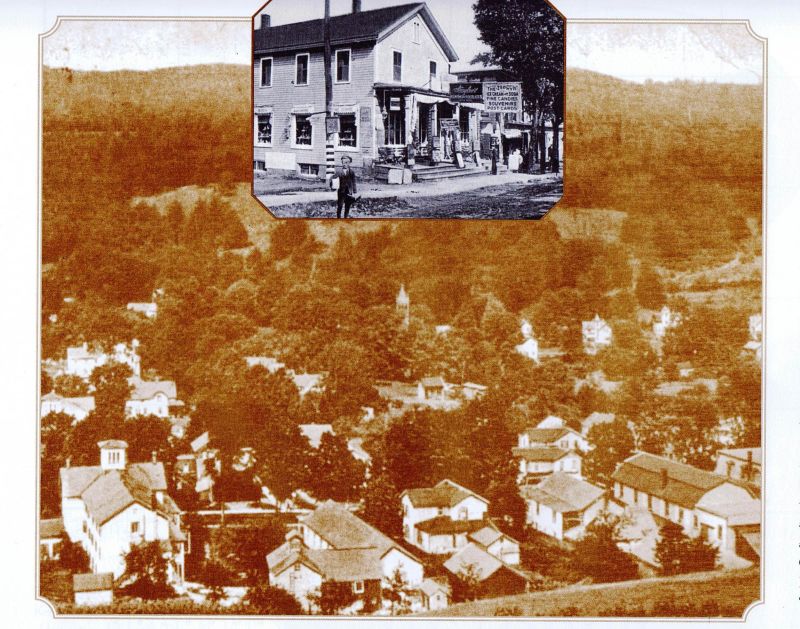
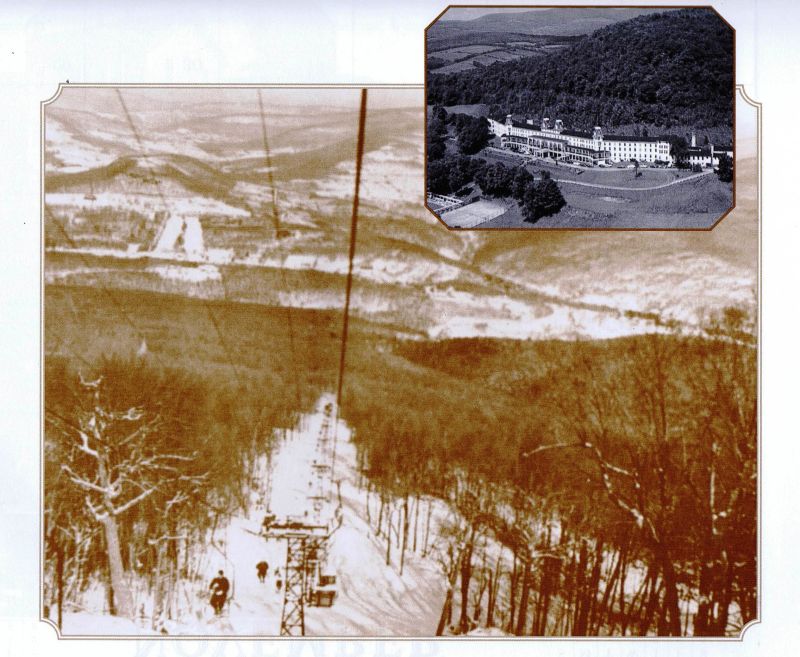
Highmount, originally named Summit, began as an Ulster and Delaware Railroad stop and a few farmhouses, situated on the boundary between Ulster and Delaware Counties. Its fortunes changed in 1881 with the building of the Grand Hotel. Ambitiously proportioned and fully one eighth of a mile long, the Grand is said to be patterned architecturally after Coney Island’s fancifully-towered Oriental Hotel. The Grand straddled the line between Shandaken and Middletown, and guests took advantage of its “sliding” bar room, which could shift from one end of the hotel to the other, depending on which township was dry or wet. Outdoor recreation took hold during the 1940’s with the opening of Belleayre and Highmount ski centers. Skiing is the hamlet’s continuing attraction today.